

About Me
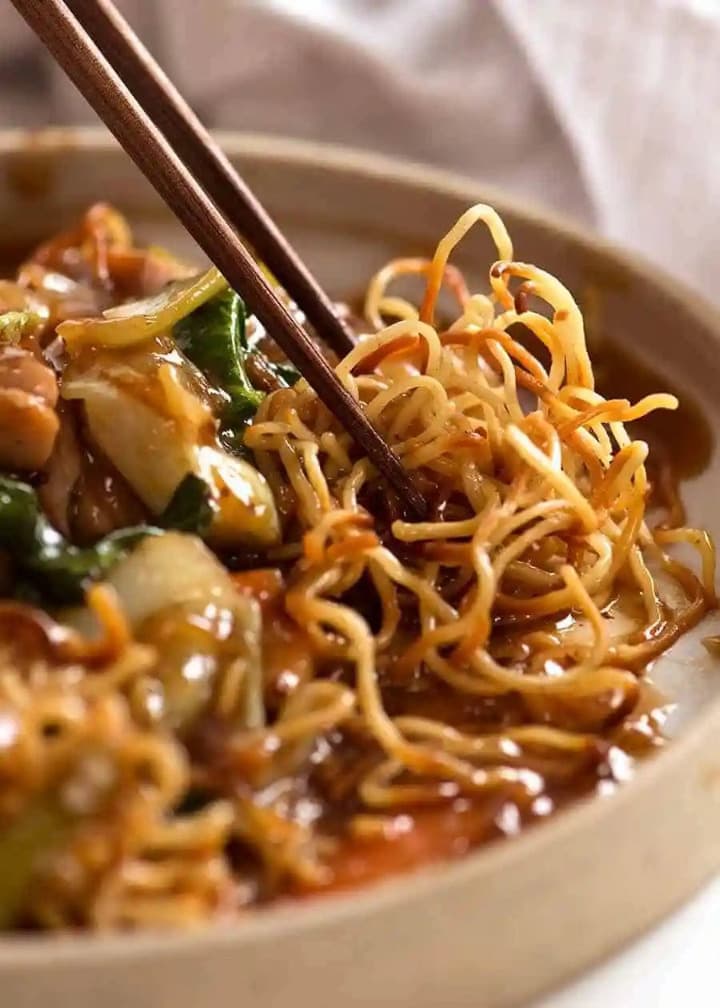 Add remaining sauce, vegetables, and pork to noodles and toss well over heat to combine. Transfer lo mein to a platter and sprinkle sliced green scallions all over, along with sesame seeds, if using. Serve right away, passing sambal oelek at the table if desired.
Heat 1 teaspoon oil in a wide nonstick skillet over high heat until shimmering. Add mushrooms and cabbage and season lightly with salt. Cook, stirring and tossing frequently, until barely cooked through but still bright, about 3 minutes. Transfer to a medium bowl. Add 1 more teaspoon oil to wok and return to high heat until lightly smoking. Add carrot and snow peas and season lightly with salt. Cook, stirring and tossing frequently, Noodle Game Patch Notes|Https://Noodleinsight.Com/ until barely cooked through but still bright, about 3 minutes. Transfer to bowl with mushrooms and cabbage.
Heat 1 tablespoon vegetable oil in a wok over high heat until smoking. Add cabbage and cook, stirring regularly, until lightly browned, about 2 minutes. Work in batches if necessary to get the leaves nicely charred. Transfer to a large bowl and set aside. Add 1 tablespoon oil to wok and return to heat until smoking. Add mushrooms and cook, stirring regularly, until lightly browned and tender-crisp, about 2 minutes. Add chives and cook, stirring, until lightly wilted, about 1 minute. Transfer to bowl with cabbage.
In a wok or large cast iron skillet, heat 1 tablespoon (15ml) neutral oil over medium-high heat until shimmering. Add ginger, garlic, and white scallion pieces and stir-fry for 30 seconds. Increase heat to high and add purple cabbage, Chinese broccoli (or Napa cabbage), and carrots. Cook, stirring and tossing, until vegetables are charred in spots and just softened, 3 to 5 minutes. Transfer to a plate.
Preserved mustard root like this (often labeled "Sichuan Preserved Vegetable") can be found in cans or jars in your Chinese market. Once opened, they'll last for months in a sealed container in the fridge. You don't need much to add big flavor to dishes.
Perhaps the biggest key to making excellent dan dan noodles is to make your own roasted chile oil. When done right, it gets a rich, fruity, smoky flavor that none of the store-bought stuff can touch. It's really quite simple. Toasted Sichuan peppercorns have a sweet, citrus-like aroma with a mouth-numbing quality, while roasted chile oil brings on the heat.
Anyone who's spent a significant amount of time in or around New York City should be intimately familiar with scallion pancakes, the flaky, savory disks studded with chopped scallions and fried. We use a laminated dough here (much as you would if making puff pastry) to create layer upon layer of very thin sheets of flavorful pastry. Frying them in oil is traditional; for a puffier, crispier experience, try cooking them on the grill .
One of the problems with ordering dan dan noodles at a Chinese restaurant is that you never know exactly what you'll get. Are they gonna deliver the hardcore Sichuan version swimming in red-hot chile oil and laced with pickled zha cai (mustard root) and mouth-numbing Sichuan peppercorns? Or can you expect the equally delicious but totally different Chinese-American version with more pork, a vinegary soy-based sauce, perhaps some greens, and a sprinkling of peanuts?
Toast drizzled with extra-virgin olive oil and sprinkled with parsley, garlic, and red pepper flakes? As long as you don't mind the effects it might have on your breath, it makes for a fine start to the day.
It's not as popular with the U.S. audience as it is with the British (yet), but it seems that as palates are shifting and folks are becoming more and more accustomed to spicier foods, jalfrezi is getting primed to win over this side of the pond as well. With its origins in China, jalfrezi is more similar in its cooking method to dry-fried Chinese dishes rather than the typical wet Indian curry. This one incorporates chickpeas, potatoes and spinach, and a simple chutney of cilantro, garlic, chile, and lime juice finishes it off.
We like using inexpensive country-style boneless pork ribs for this, cutting them down into small strips. Cutting everything small is important in a stir-fry, because you want it all to cook through quickly. You can also use boneless loin chops here, although we recommend sticking with the rib cut if you can find it, since it's got more marbling and is therefore more flavorful.
To make sure the pork stays nice and tender, even when smacked with the high heat of a wok, we first soak it for 15 minutes in a baking soda solution. This is a trick we picked up from Cook's Illustrated , and, having tested it side by side with unsoaked pork, we can confirm it makes a huge difference. Thanks to the alkalizing effects of the baking soda, the pork retains more moisture and tenderness, even as it browns and crisps on its exterior—an important step for building flavor, but one that can toughen up the meat at the same time.
Bring a large pot of salted water to a boil and cook noodles, stirring regularly with tongs or long chopsticks, until al dente and separated, about 1 minute. Drain and transfer to a large bowl. Toss with 1 tablespoon vegetable oil and set aside.
Location
Occupation
Our newest member: Spicy Summer Dishes
